The Donner DDP-400 Digital Piano review is for players seeking a full-size home instrument with progressively weighted keys, an extended speaker cabinet, and plenty of built-in practice material.
Its substantial furniture-style design and broad feature set make it most compelling for a dedicated practice space.
Donner DDP-400 Review Summary
The quick verdict
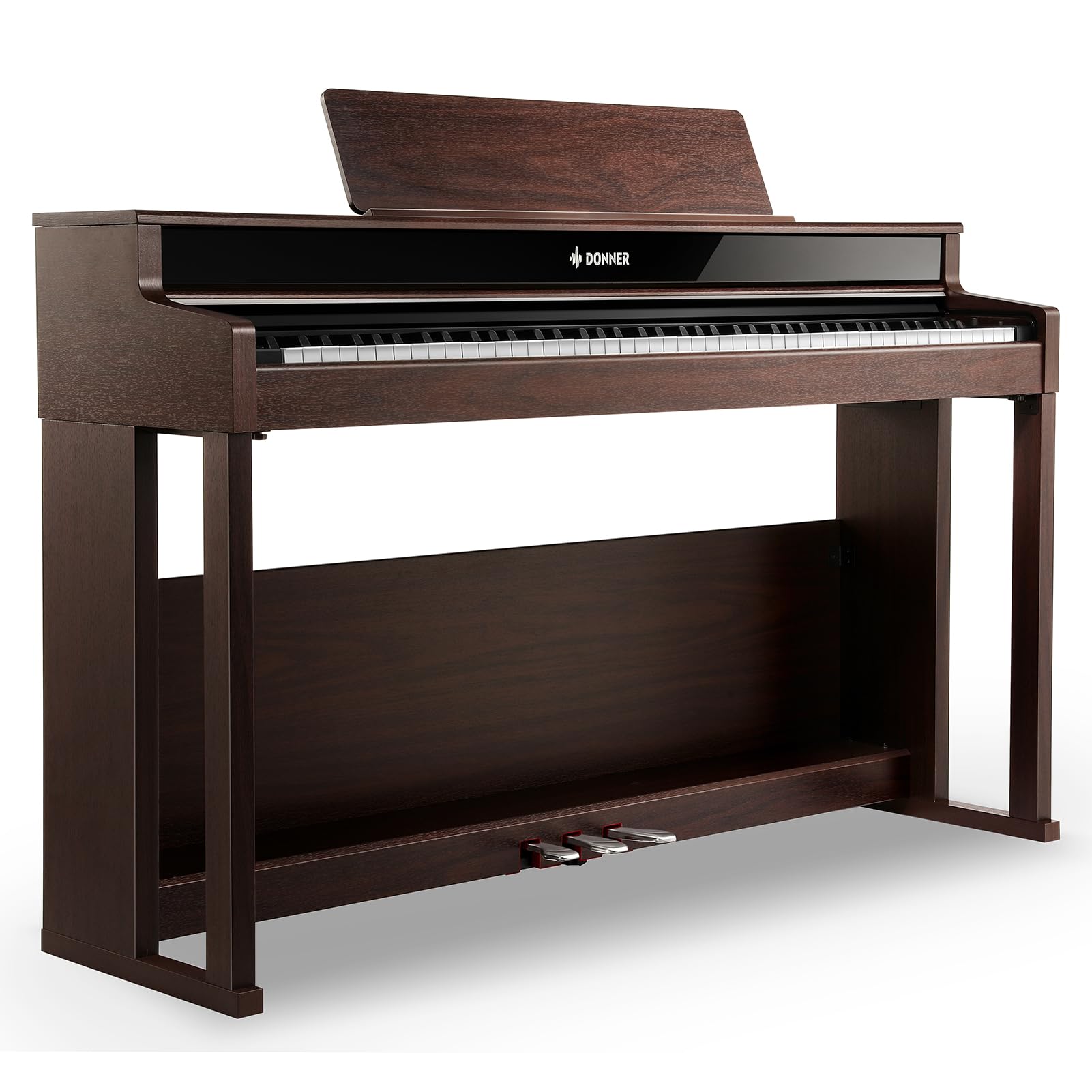
700+ ratings
Read Amazon ReviewsDonner DDP-400 Digital Piano
A full-size, furniture-style digital piano for home players who want graded hammer action, built-in practice features, and app connectivity.
- Full-size 88-key progressive weighted keyboard with hammer action and double-contact design.
- Extended speaker cabinet intended to provide room for longer strings, a larger soundboard, richer harmonics, and stronger resonance.
- French Dream sound source with dual 15W amplifiers and metal pedals.
- Maximum 128-note polyphony, 138 tones, 100 rhythms, 20 demo tracks, and 100 etudes.

Pros
- Progressive weighting across the keyboard gives the action a more piano-like design than an evenly weighted layout.
- The extended cabinet and dual amplifiers are tailored to a room-based setup.
Consider before buying
- The cabinet is heavy and sizable, so moving it or fitting it into a compact room may take planning.
- The extensive rhythm and tone functions may be unnecessary for players who mainly want a straightforward piano practice instrument.
Read the full review summary
The DDP-400 combines an 88-key progressive hammer-action keyboard with a cabinet designed to create a larger acoustic presence at home.
Its French Dream sound source, dual 15W amplifiers, metal pedals, and 128-note maximum polyphony give players several tools for expressive practice, while 138 tones, 100 rhythms, demos, and etudes offer variety beyond piano playing.
This is a better fit for a household or dedicated room than for someone who needs a lightweight instrument to move frequently: the piano weighs about 49.5 kg and measures 138.5 × 89 × 40 cm.
App connectivity and included headphones add practical flexibility, but buyers should check that the cabinet dimensions and control layout suit their room and routine.
The buying factors
Donner DDP-400 Scorecard
Editorial scores reflect listed features and buyer fit; they are not laboratory measurements or customer ratings.
Key action
The full-size, progressive hammer-action keyboard is weighted more heavily in the bass and more lightly in the treble, with double-contact design.
Sound features
The French Dream sound source, extended speaker cabinet, and dual 15W amplifiers give the piano a considered home-focused sound setup.
Practice variety
138 tones, 100 rhythms, 20 demos, 100 etudes, and accompaniment options provide a wide range of built-in material.
Expressive headroom
Maximum 128-note polyphony and metal pedals support layered or sustained playing without making claims about measured sound quality.
App connectivity
Connections to iOS, Android, and USB MIDI can support compatible lesson, recording, and arrangement workflows.
Room practicality
The upright cabinet offers a furniture-style presence, but its dimensions and nearly 50 kg weight call for a stable, planned location.
Key Features and Specifications of Donner DDP-400
- Full-size 88-key progressive weighted keyboard with hammer action and double-contact design.
- Extended speaker cabinet intended to provide room for longer strings, a larger soundboard, richer harmonics, and stronger resonance.
- French Dream sound source with dual 15W amplifiers and metal pedals.
- Maximum 128-note polyphony, 138 tones, 100 rhythms, 20 demo tracks, and 100 etudes.
- Chorus and mixing effects, timbre and rhythm banks, intro/outro accompaniment, and A/B interludes.
- Connectivity to iOS and Android devices plus USB MIDI for compatible apps and music workflows; headphones are included.
- Measures 138.5 × 89 × 40 cm and weighs approximately 49.54 kg.
Pros and Cons of Donner DDP-400
Pros
- Progressive weighting across the keyboard gives the action a more piano-like design than an evenly weighted layout.
- The extended cabinet and dual amplifiers are tailored to a room-based setup.
- A substantial collection of tones, rhythms, demos, and etudes supports varied practice.
- USB MIDI and mobile-device connectivity broaden possible lesson and music-making uses.
- Included headphones make quiet practice an option without requiring a separate purchase.
Consider before buying
- The cabinet is heavy and sizable, so moving it or fitting it into a compact room may take planning.
- The extensive rhythm and tone functions may be unnecessary for players who mainly want a straightforward piano practice instrument.
- Before buying, confirm that the included headphones, mobile-device connections, and USB MIDI fit your intended setup and compatible apps.
Who Should Buy Donner DDP-400?
Good fit
Consider the DDP-400 if you want an 88-key instrument to keep in one place and value a graded hammer-action feel, built-in practice content, and a cabinet that reads as home furniture.
The combination of etudes, demonstrations, rhythms, and multiple tones can suit learners and family members who want more than a single piano voice.
It may also suit a player who expects to connect a phone or tablet for lessons or use USB MIDI in a recording or arrangement workflow.
Check the room dimensions and instrument placement first, then confirm that your preferred devices and apps work with the available connections.
Who should skip it
Choose a more portable format if you expect to carry the piano between rooms, rehearsals, or venues; its listed weight and upright cabinet are better suited to a planned home location.
If you want a stripped-back instrument with few extra sounds or practice modes, the DDP-400’s many built-in options may add complexity you will rarely use.
How the Donner DDP-400 Fits a Home Piano Setup
Progressive action for piano practice
The DDP-400’s 88 full-size keys use hammer action and progressive weighting, with heavier resistance in the low register and lighter resistance in the high register.
That design is relevant for players who want a consistent full-range keyboard for developing touch; the double-contact description adds detail about the key mechanism, though feel remains personal and is best assessed in person where possible.
Cabinet and amplification shape the setup
The extended speaker cabinet is designed around a larger soundboard and longer strings, while the built-in amplification uses two 15W units. Together they make this a room-centered piano rather than a compact board intended for easy transport.
The design may appeal to buyers who want a dedicated instrument with a furniture-like presence, provided they have enough space for its stated footprint.
Practice features extend beyond piano tone
With 138 tones and 100 rhythms, alongside 20 demos and 100 etudes, the DDP-400 offers substantial built-in material for exploration and practice.
Intro/outro accompaniment and A/B interludes add structure to rhythm-based playing, while chorus and mixing effects give additional sound-shaping options. Buyers who want only a direct piano voice may find this breadth less useful.
Plan connections around your workflow
The piano supports connections to iOS and Android devices and USB MIDI, which can be useful for compatible lesson apps, demo recording, or arrangement work.
The practical value depends on the apps and devices you plan to use, so check their connection requirements before purchase. Included headphones provide an option for quieter practice at home.
Alternatives to Donner DDP-400
Home Digital Pianos alternative
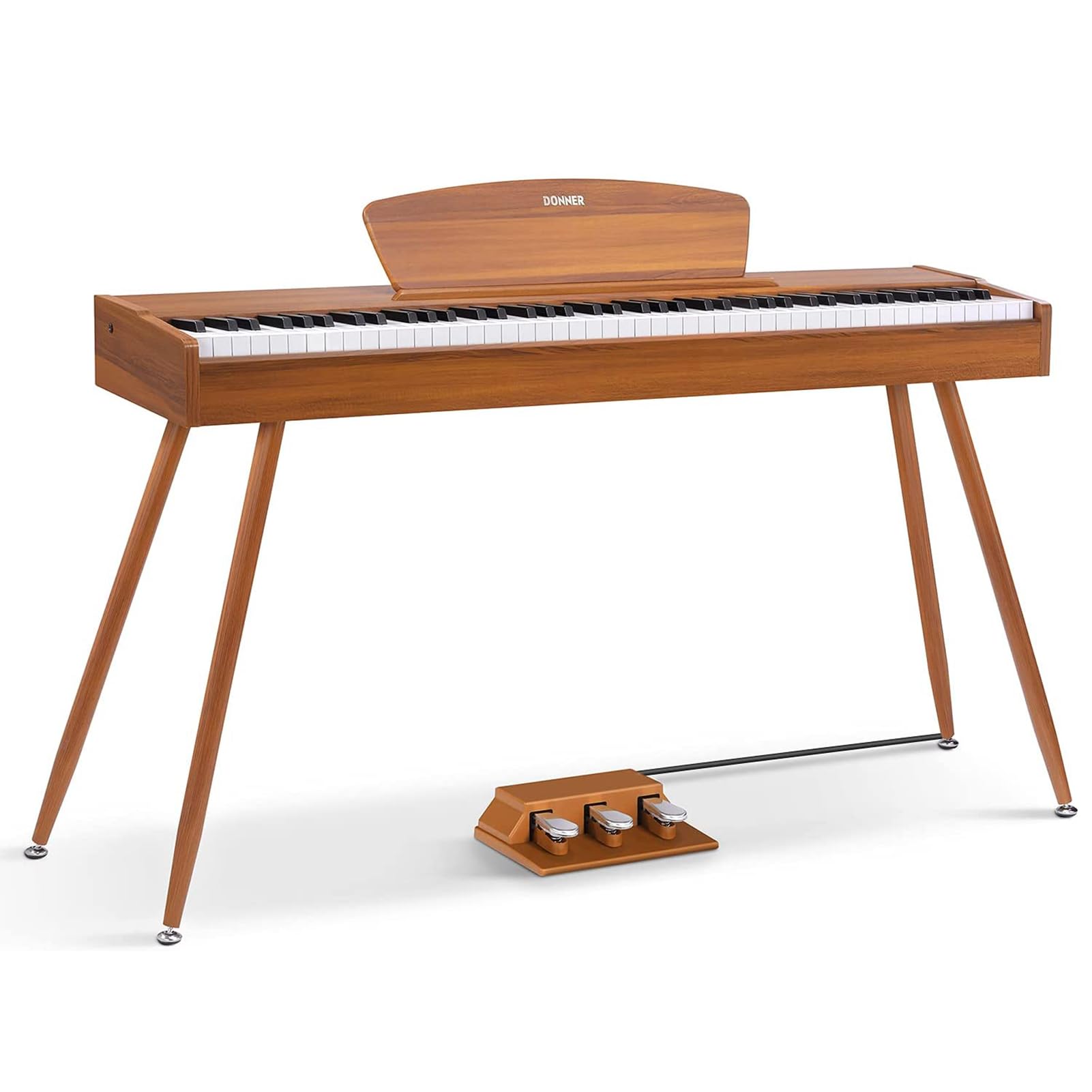
1,000+ ratings
Read Amazon ReviewsDonner DDP-80 Digital Piano
Consider the DDP-80 if its listed triple pedal and stronger maximum speaker power better match your setup. The DDP-400 offers more specified built-in rhythms, tones, demos, and etudes, so it may suit buyers who value that practice variety.
- The DDP-80 also has 88 fully weighted hammer-action keys and a French Dream sound source, with 128-note polyphony, two 25W maximum-power speakers, a triple pedal, and USB MIDI app connectivity.
- The DDP-400 combines progressive hammer action, a broad practice library, and an extended speaker cabinet in a substantial home setup.
Home Digital Pianos alternative
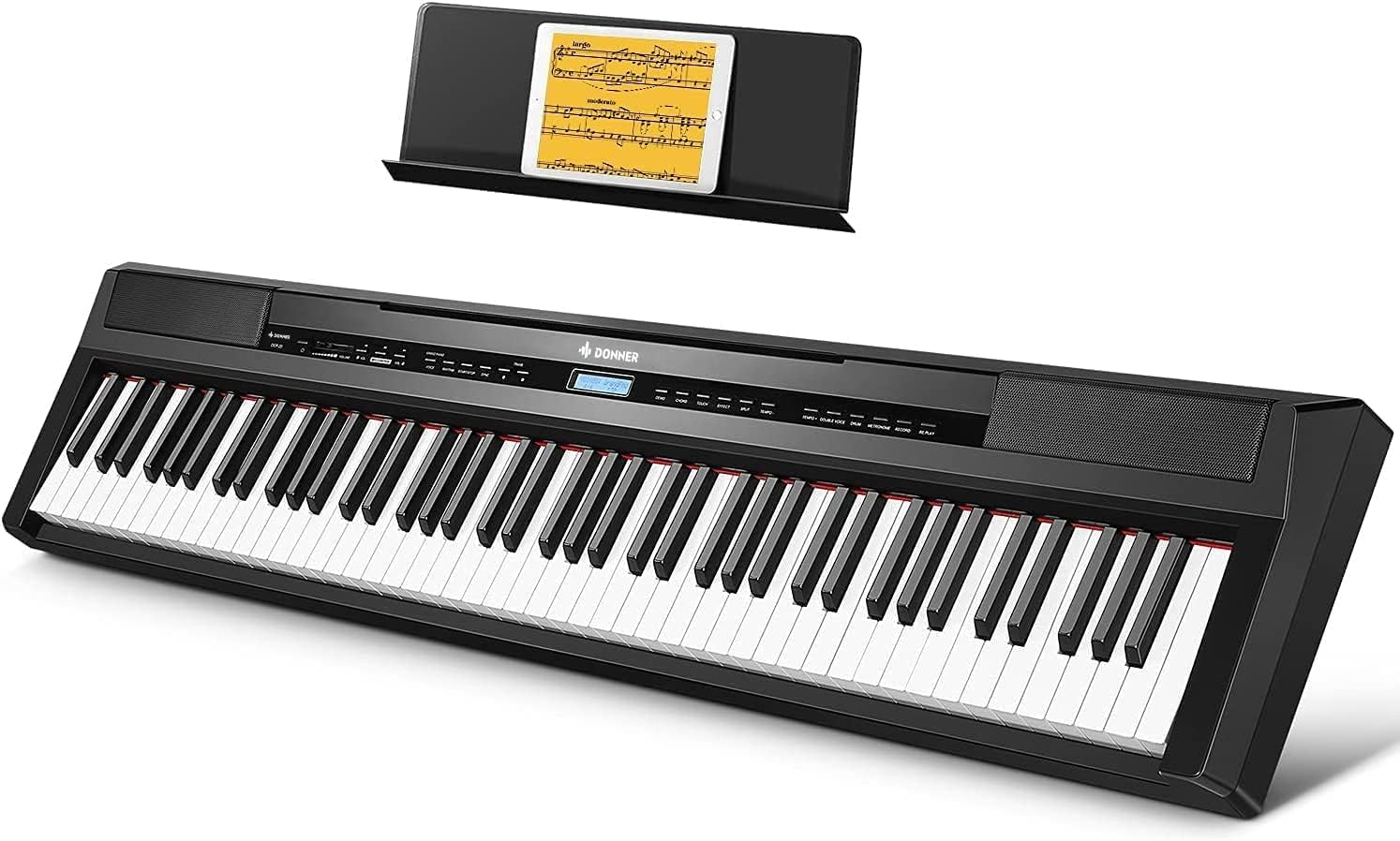
2,000+ ratings
Read Amazon ReviewsDonner DEP-20 Digital Piano
The DEP-20 is worth comparing if portability, adjustable touch response, a display, and a broader tone count matter more than an upright cabinet. The DDP-400 is the more home-furniture-oriented choice and includes more specified rhythms, etudes, and demos.
- The DEP-20 has 88 full-weighted hammer-action keys with adjustable touch response, 238 tones, a backlit LCD, two 25W amplifiers, and a portable design.
- Its included components list a sustain pedal, sheet music stand, power adapter, and manual.
- The DDP-400 is a furniture-style home piano with progressive hammer action, an extended cabinet, and a large built-in practice library.
Is Donner DDP-400 Worth It?
The Donner DDP-400 is worth considering for a home player who wants a full 88-key progressive hammer-action instrument, substantial built-in practice material, and a cabinet designed as a permanent part of the room.
Its sound and connectivity features make it versatile for practice and compatible app-based workflows.
Plan for its size and weight, and verify that its mobile and USB MIDI connections suit the devices and apps you use.
If those fit your space and routine, the DDP-400 offers a feature-rich home piano; if portability or simplicity is the priority, compare a lighter or more streamlined design.
Your review at a glance
700+ ratings
Read Amazon ReviewsDonner DDP-400 Digital Piano
A full-size, furniture-style digital piano for home players who want graded hammer action, built-in practice features, and app connectivity.
- Full-size 88-key progressive weighted keyboard with hammer action and double-contact design.
- Extended speaker cabinet intended to provide room for longer strings, a larger soundboard, richer harmonics, and stronger resonance.
- French Dream sound source with dual 15W amplifiers and metal pedals.
- Maximum 128-note polyphony, 138 tones, 100 rhythms, 20 demo tracks, and 100 etudes.